
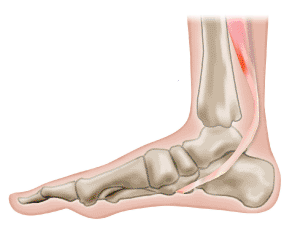
Posterior tibial tendonitis is an injury to the tendon that connects the posterior tibialis muscle in your leg to your foot. This tendon helps turn the foot during walking, and it also supports the arch of the foot. Most patients who have this condition can benefit from physical therapy.
What causes posterior tibial tendonitis?
Trauma or repetitive stress can injure the posterior tibial tendon, causing pain and swelling on the inner side of the foot or ankle. If you injure this tendon, you may experience gait problems, develop a flat foot, or your toes may point inward or outward.
How do you treat injuries to the posterior tibial tendon?
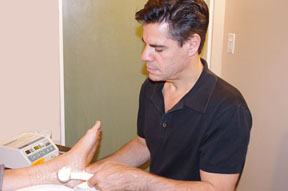
Treatment in the early stages includes resting the tendon, either by modifying activities or by using a shoe insert or a cast. Your doctor may also recommend anti-inflammatory medication. Physical therapy for this injury may include ultrasound and massage to reduce pain and swelling, and exercises to strengthen and improve range of motion in the muscles that support the foot’s arch. Surgery is usually a last resort, reserved for patients who don’t respond to conservative treatments. Many patients see improvement with 4-8 weeks of physical therapy.
Hector Mayo, clinical director of Grand Central Physical Therapy, recalls a patient who normally walked 20 minutes each way on her commute from Grand Central Terminal to her office. One day she stepped off a curb wrong, and she later developed pain. Without the tendon adequately supporting her foot, her arch flattened. This caused her foot to roll inward, and she was no longer able to maintain a normal gait. Her commute became too painful, and she switched to the subway from walking. But after 5 weeks of treatment at GCPT, she was able to resume walking.