
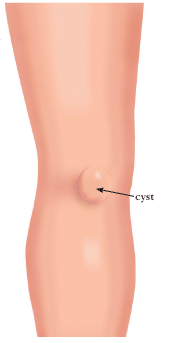
A Baker’s cyst, also called a popliteal cyst, is a fluid-filled lump behind the knee. It is named after William Morrant Baker, the doctor who first described it. The cyst occurs when the popliteal bursa, a soft pouch behind the knee, accumulates excess fluid and expands. It may feel like a water-filled balloon.
The fluid in a Baker’s cyst is synovial fluid, which normally lubricates the joint. Excess fluid can build up after an injury such as a tear of the meniscal cartilage in the knee. These cysts are also associated with knee arthritis.
Symptoms of a Baker’s cyst
Symptoms may include stiffness, pain, swelling, or a decrease in range of motion. A cyst that ruptures may also cause bruising on the back of the knee and calf. Sometimes a blood clot can be confused with a ruptured Baker’s cyst, but in the case of a blood clot, immediate treatment is required. If your calf is red and swollen, you should seek medical attention.
How does a physical therapist treat a baker’s cyst?
Baker’s cysts may go away without treatment, but large and painful cysts are usually treated. If you have a Baker’s cyst, a physical therapist can teach you range of motion and strengthening exercises to reduce symptoms and maintain knee function. Your therapist may also apply ice or a compression bandage to reduce swelling. Your doctor may also reduce swelling with a corticosteroid injection or by draining the fluid from the cyst. If the cyst is caused by torn cartilage or arthritis, surgery may be recommended.