Lumbar Radiculopathy

Do you have pain that starts in your lower back and radiates down your leg?  Or do you have tingling or numbness from your lower back to your leg? Pain, tingling or numbness that runs from your lower back down your leg can be caused by lumbar radiculopathy.

What is lumbar radiculopathy?

Lumbar radiculopathy occurs when a nerve root in your lower back is irritated or pinched. As a result, you may feel pain, tingling or numbness. Sometimes radiculopathy causes sciatica, which refers to pain that travels along the sciatic nerve, which originates in your lower back and runs down the back of your leg.

What causes lumbar radiculopathy?

Causes of lumbar radiculopathy include spinal stenosis, a herniated disk, degenerative changes that come with aging, a traumatic injury like a fall or a car accident, or poor posture.

Can physical therapy treat lumbar radiculopathy?

Physical therapy can often relieve the pain and tingling that comes from radiculopathy. Your physical therapist develops an individualized treatment program based on your symptoms. PT may include exercises to strengthen the muscles that support your spine, stretching, or other techniques to improve mobility.

Your physical therapist will teach you exercises you can continue on your own once therapy concludes.


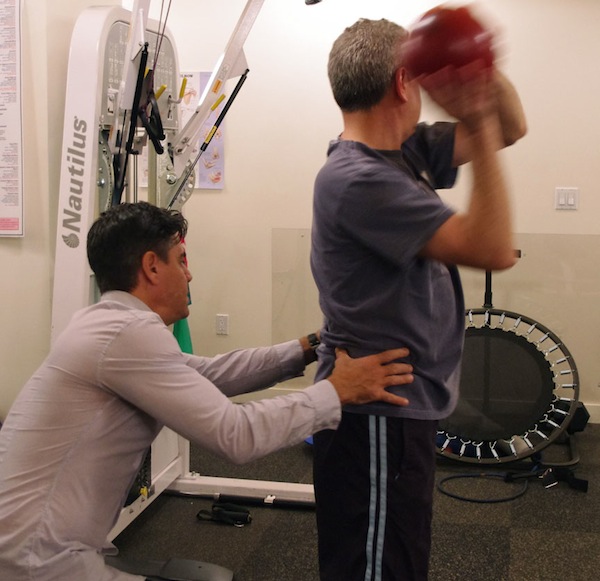
Strengthening the muscles that support the spine may reduce back pain caused by lumbar radiculopathy. Clinical director Hector Mayo guides a patient in doing oblique abdominal strengthening.

Physical Therapy After Bunion Surgery

bunionectomy scarFollowing surgery to remove a bunion, physical therapy can improve strength and range of motion in the foot and ankle. Therapeutic massage can alleviate swelling and stiffness in the joints.

Splint for Olecranon Fracture or Wrist Surgery

splint for olectranon fracture

This splint was made for a patient with a fracture of the olecranon, the bony prominence of the elbow. The splint keeps the elbow still as it heals. It can also be used for patients who have had wrist surgery; the splint keeps the wrist from turning.


Metatarsal Fractures

metatarsalA very common break that occurs in the foot is the fifth metatarsal fracture. This is a break in the long bone that connects to the little toe. One of the exercises to help rehabilitate the foot is pictured at right. The elastic band provides resistance that increases stability and strength in the weight-bearing foot.


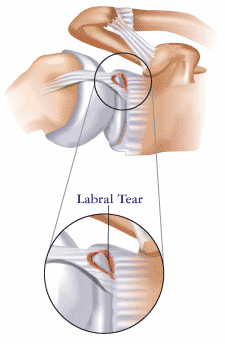
Shoulder Labral Tear

Shoulder_Labral_Tear2 Q & A with Robert Ortiz, P.T.

Q.   What is the shoulder labrum, and how does it get torn?

A.   The labrum is a ring of cartilage that surrounds the shoulder socket. It helps to keep the ball of the humerus (the upper arm bone) in place. The labrum can be torn by a shoulder dislocation or subluxation. Overuse or the effects of aging can also tear the shoulder labrum.

Q.   What are the symptoms of a torn shoulder labrum?

A.   A torn labrum usually causes pain in the shoulder. There may also be instability in the shoulder, or a catching sensation in the shoulder when you move your arm.

Q.   How is a shoulder labral tear treated?

A.   Physical therapy can improve range of motion and strengthen the muscles that support the shoulder. If physical therapy does not eliminate symptoms, surgery may be needed.

Q.   If I have surgery to repair a torn labrum, why do I still need physical therapy?

A.   After surgery to repair a torn labrum, physical therapy will help you regain range of motion and strength in the shoulder.

Q.   How long with the physical therapy take?

A.   You may need several months of physical therapy to recover from a torn shoulder labrum.

Lumbar Strain

hands_on_hips_small

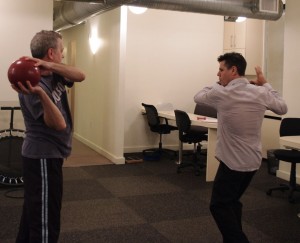
When lumbar strain causes back pain, strengthening the core muscles can help. Trunk rotation exercises are one way to make the core muscles stronger.IMGP1804

Metacarpal Fractures

David Ricci treats metacarpal fracture

Certified hand therapist David Ricci uses a joint mobilization technique to increase range of motion in a patient with a fractured metacarpal.