Top Five Advantages of Telehealth for Physical Therapy

by Nancy Simpkins

Telehealth saves time
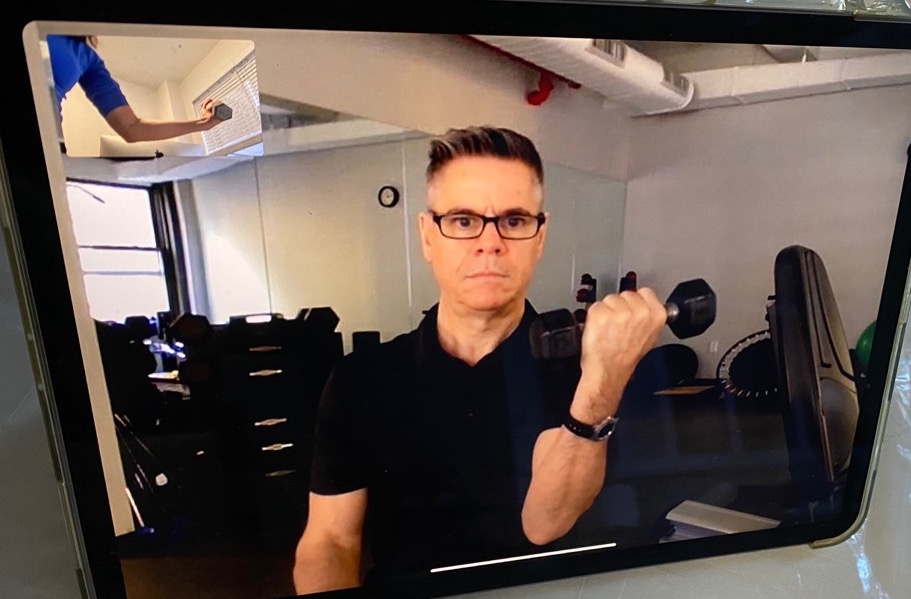
Telehealth physical therapy sessionYou’re busy; we all are. Some days you don’t have time to get in your car or on the subway, travel to a medical office, and change from street clothes to workout clothes, investing up to an hour before you’ve even started treatment.

If you’re working from home, you may be wearing your exercise clothing already, and you can just connect with your physical therapist online to have treatment from your home. Telehealth lets you fit physical therapy into your schedule more easily.

Virtual visits reduce Covid-19 risk

While we take every precaution at our therapy center, taking public transportation to get here can put you in close contact with people you don’t know.

You’re more likely to build an exercise habit

Many repetitive-stress injuries and medical issues arise from lack of exercise to strengthen or stretch muscles. When you get in the habit of regularly doing a therapeutic exercise routine at home, you’ll be more likely to prevent recurrences of the problem after formal treatment ends.

Your physical therapist can evaluate your home setup

When your therapist can see how you have your workstation set up, it’s easier to recommend ergonomic adjustments that reduce the likelihood of repetitive motion injuries. If you have balance issues, your therapist can spot obstacles in your home that might increase the risk of a fall.

Telehealth improves accessibility

Some patients are unable to drive or travel on public transportation. Telehealth eliminates the need for a caregiver to bring them to appointments.
Custom Brace for Madelung’s Deformity

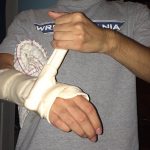
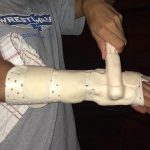
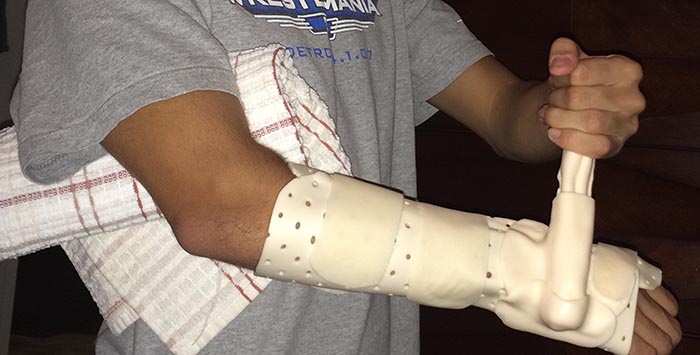
Custom braceMadelung’s Deformity is a condition in which one bone in the forearm is larger than the other. It is treated with surgery to lengthen the smaller bone. After surgery, the patient may have difficulty rotating the forearm.

A custom-made brace helps the patient to increase range of motion. Each day, the patient puts moderate pressure on the handle until feeling a small stretch. This is done four or five times throughout the day, with 10 repetitions each time. The patient usually uses the brace for two to three months.

Lateral Epicondylitis (Tennis Elbow)

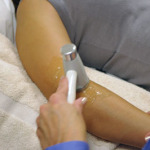
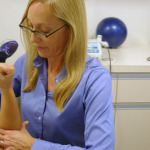
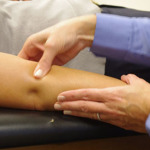
Physical therapist Lisa Gemmel treats a patient with lateral epicondylitis, otherwise known as tennis elbow. Administration of ultrasound causes a thermal effect and promotes healing. Joint mobilizations promote pain-free, full range of motion, which allows an increase in function. Transverse friction massage helps bring blood flow to the injured tendon to promote healing, and it also helps break up scar tissue.


Triangular Fibrocartilage Complex Tears

Triangular Fibrocartilage ComplexBy Nancy Simpkins

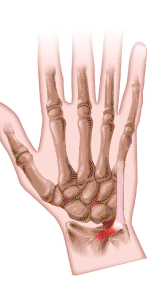
Do you have a feeling of catching inside the wrist joint, pain on the ulnar side of the wrist (near the pinky), or a clicking sound when you move your wrist? If so, you may have a tear in your triangular fibrocartilage complex (TFCC).

The TFCC is a structure made up of ligaments and cartilage in the wrist. It enables the wrist to move in six different directions, and is sometimes referred to as the “wrist meniscus.” A fall onto an outstretched hand can cause injury to the TFCC.  Sports that involve gripping something, such as tennis and gymnastics, increase the risk of TFCC injury.  This type of injury becomes more likely after age 30, when degenerative changes in the TFCC begin.

After a TFCC injury, hand therapy can help stabilize the joint. Therapy may include splinting and grip exercises. Treatment for a torn TFCC may include surgery.

Cubital Tunnel Syndrome

By Marianne Pilgrim, OTR/L, CHT

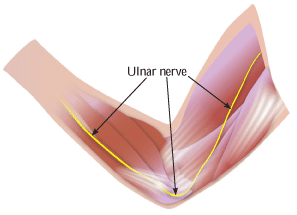
graphic showing ulnar nerveMost people are familiar with carpal tunnel syndrome, but few know about a similar condition: cubital tunnel syndrome. While carpal tunnel syndrome affects the median nerve at the wrist, cubital tunnel syndrome affects the ulnar nerve at the elbow.  This is the same nerve that is irritated when you hit your “funny bone” and you feel a tingling sensation running down to your fingers.

What is the ulnar nerve?

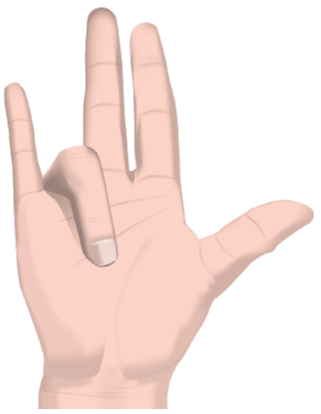
The ulnar nerve originates from the spinal cord at the neck, and it runs through the entire arm. This nerve provides sensation to the small and ring fingers and strength to the small muscles of the hand.  The ulnar nerve may be compressed as it passes behind the medial epicondyle, a bony bump on the inside of the elbow.  Cubital tunnel syndrome is a pathologic compression, friction or traction of the ulnar nerve in the elbow region.  Symptoms may include impaired sensation of the small and ring fingers, burning pain, weak grip and clumsiness of the hand.

Causes and treatments of cubital tunnel syndrome

Common causes of cubital tunnel syndrome include direct pressure, prolonged bending of the elbow, repetitive movement, congenital anomolies, inflammation and bony changes. Conservative treatment of this condition may include use of NSAIDs (non-steroidal anti-inflammatory drugs), education by a therapist regarding proper ergonomics and techniques to avoid aggravating positions or activities, and nighttime splinting or daytime padding of the elbow.  If the symptoms do not respond to conservative treatment, surgery may be required to provide more space for the ulnar nerve. In a procedure known as ulnar nerve transposition, the nerve is moved to the front of the elbow.  Therapy is usually prescribed after surgery to increase range of motion, increase strength and provide scar management.

Osteoarthritis of the Hand

outstretched hand with flowers behind itAs summer approaches, many people will resume a favorite pastime: gardening. Engaging in a repetitive activity like gardening can sometimes lead to arthritis, but educating yourself about how to prevent and manage this disease can preserve your joints for many more gardening seasons.

According to the Centers for Disease Control, osteoarthritis, the most common type of arthritis in the hands, affects about 33 million Americans.  Osteoarthritis is a degenerative condition in which the cartilage that cushions the bone surfaces at the joints wears down, resulting in pain and stiffness.  The exact cause of osteoarthritis is not known, but joint injury, repetitive overuse, lack of physical activity and heredity are associated with an increased risk of developing the disease.

In the hand, osteoarthritis most commonly develops at the base of the thumb and in the two smaller joints of each finger. Symptoms may include pain, stiffness, swelling, bony nodules and weakness.  Osteoarthritis is diagnosed with a thorough medical history, examination and X-ray.

Hand therapy for osteoarthritis

If you have osteoarthritis, hand therapy can help preserve your joints.   Certified hand therapists educate patients on joint protection techniques, activity modification, stretching and strengthening. They can also fabricate custom resting splints and recommend ergonomic tools for gardening and everyday tasks.  Patients with advanced osteoarthritis that has caused joint damage and limitations in joint function may benefit from surgery.

Dupuytren’s Disease

By Marianne Pilgrim, OTR/L, CHT

depuytrenDupuytren’s disease is a disorder of the connective tissue in the palm of the hand. The disease usually starts with nodules that progress to tendon-like bands. These eventually pull the fingers, particularly the ring and small fingers, into a bent position toward the palm. It becomes difficult to straighten or spread the fingers, limiting activities such as shaking hands, putting hands into pockets or gloves, and holding large objects.

The exact cause of Dupuytren’s disease remains unknown. There is a strong genetic basis, with a family history in 25% of cases. The disease is most common among Caucasian males of Northern European descent, and is less prevalent among people with Asian or African ancestry. There is also a higher incidence among smokers, alcoholics, diabetics and epileptics.  The average age of onset is 45 years for males and 60 years for females.  Dupuytren’s disease typically takes 10 years to develop from onset to the stage where correction is needed.

Mallet Finger

By David Ricci, OTR/L, CHT

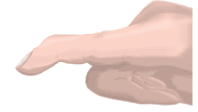
Mallet finger is caused by damage to the extensor tendon, the thin tendon that allows you to straighten your finger. When an object such as a basketball hits the tip of the finger, the extensor tendon can be overstretched, or it can avulse from the bone and pull away a piece of bone. The finger swells, cannot be straightened, and droops at the tip. This causes the mallet-shaped appearance.
Mallet finger
Diagnosis is usually confirmed through X-ray. A splint that extends to the tip of the finger is usually worn for eight weeks, followed by therapy to regain motion. Many mallet finger injuries do not require surgery, but those with large fracture fragments or misalignment of the joint may require surgical intervention. Surgery usually involves pins, wires or small screws to realign the joint and repair the fracture. An untreated mallet finger could lead to arthritis or to a permanent deformity of the involved finger.  Make a wise choice and seek early medical advice for the treatment of a mallet finger.