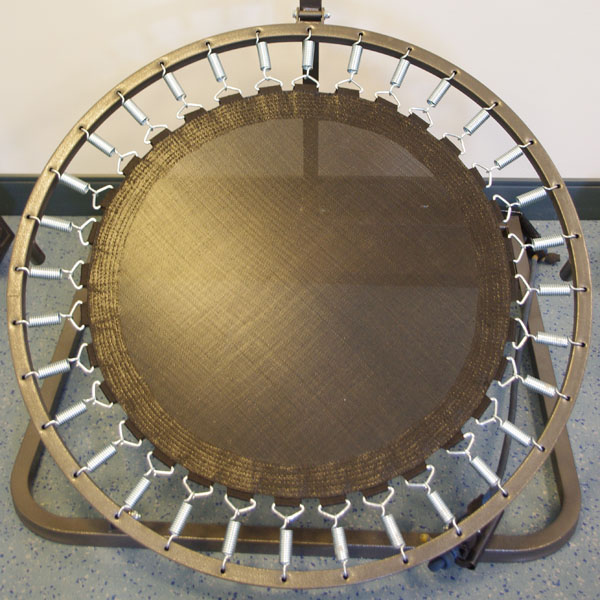
Exercises to Improve Balance

What causes balance problems?

Disorders of the inner ear, nerve damage, muscle weakness and joint instability are some of the many conditions that can cause problems with your balance. Losing your balance and falling can lead to further injury.

Can physical therapy improve my balance?

Physical therapists can help identify the cause of your balance issues. Balance problems arising from muscle weakness, joint instability and nerve damage can be treated with exercise.

Muscle weakness can arise from fractures or ligamentous injuries of the hip, knee, foot or ankle, including meniscal tears, ACL reconstructions, and patellar subluxations. Joint instability results from ligament laxity (loose ligaments), joint injuries, and fractures. Nerve damage can result from crush injuries to the lower extremities and spinal disc injuries.

Video: A physical therapist can teach you exercises to improve your balance.

COVID-19: Coronavirus outbreak updates

Telehealth and In-Person Visits are Both Available

We continue to offer virtual visits, and our office is open for in-person visits with the precautions described below.

REQUEST AN APPOINTMENT

6/4/2020

Grand Central Physical Therapy to Resume Office Appointments

As New York City starts the process of reopening, we are implementing new procedures to ensure that patients can receive in-person rehabilitation safely. Starting next week, patients can make appointments for therapy in our office. Virtual visits (telehealth) will continue to be available.

We are taking the following precautions to ensure a safe and healthy environment in our facility:

  • All therapists will be required to wear appropriate personal protective equipment (PPE), including masks and gloves, when treating patients.  All staff members in our facility will be required to wear masks.
  • All patients will be required to wear a mask at all times when in our facility.
  • All patients will be screened prior to receiving in-person therapy. Patients with fever or any respiratory symptoms should reschedule until they have been symptom-free for 14 days. Patients who have been in contact with anyone who has tested positive for Covid-19 should also reschedule until 14 days after the last contact. Virtual visits (Telehealth) will continue to be available.
  • Patients will not be able to bring a companion to the office unless it is medically necessary. When scheduling your appointment, please let us know if you have a medical need to bring someone with you. All companions will be screened as well, and must provide contact information.
  • All patients will be required to wash their hands prior to treatment, and upon completion of treatment.  Hand sanitizer will also be available throughout the facility.
  • Social distancing will be observed throughout our facility, with a minimum spacing of six feet.   No more than two patients will be allowed in the waiting room at the same time, and no more than two patients will be allowed in the gym at the same time.
  • Appointments will be spaced apart in order to allow sufficient time to thoroughly disinfect surfaces.
  • All co-pays will be processed remotely via credit card.
  • New patients should fill out registration forms online before making their first appointment.

4/20/2020

Our therapists are all offering telehealth sessions. To schedule an appointment, please call our office phone (212-697-3438.)

3/22/2020

Our office is temporarily closed in order to comply with New York State directives to eliminate nonessential contact.

We will reopen the office as soon as it is determined to be safe for our patients and staff. Thank you for your understanding. We hope to welcome you back to our office soon.

We hope to have telemedicine options set up within the next day or two. For more information, please leave a message on our office phone, 212-697-3438, and someone will call you back as soon as we have information.

Shoulder Instability and Weakness

Shoulder instability may follow a traumatic injury, or it can result from repetitive motions that weaken the shoulder joint.

What is shoulder instability?

The shoulder is the connection of three bones: the arm bone (humerus), the shoulder blade (scapula) and the collarbone (clavicle). The head of the humerus is a ball that fits into a socket, and it is held in place by muscles, ligaments and tendons. Weakness in the joint increases the risk that the ball will pop completely out of the socket (dislocation) or come partway out (subluxation).

A fall may cause the initial dislocation or subluxation, and the injury weakens the shoulder’s supporting structures. The joint then becomes susceptible to subsequent dislocations or subluxations. Repetitive motions involving the shoulder can also cause weakness and instability. Sports such as football, basketball, baseball and soccer increase the risk for injuries that lead to shoulder instability.

Treating shoulder instability with physical therapy

While surgery is sometimes necessary, most cases of shoulder instability and weakness can be treated with physical therapy. Strengthening exercises, heat, cold, massage, ultrasound and electrical stimulation are some of the treatments that may be helpful.

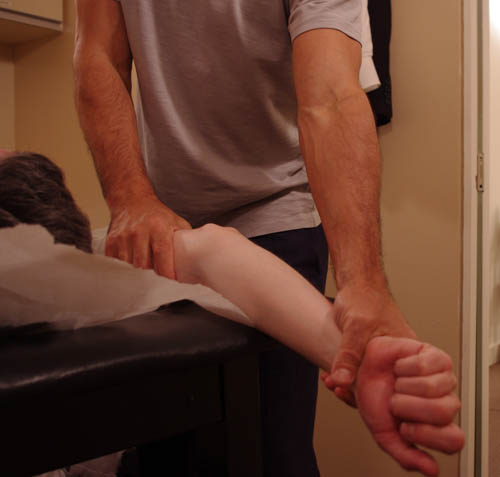
Passive Range of Motion

IMGP0099

For a patient with frozen shoulder (adhesive capsulitis), passive range of motion increases external rotation and flexion.


IMGP0102


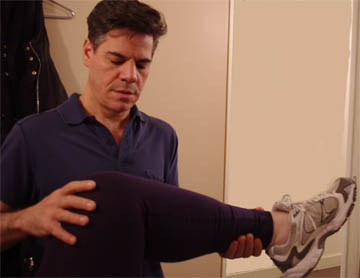
IMGP0755_corrected_2Passive range of motion also helps a patient with osteoarthritis of the knee. When the physical therapist moves the joint without the patient making any effort,  pain and stiffness can be reduced.

LOCATION AND HOURS

Located in the Graybar building next to Manhattan’s Grand Central Station, we are convenient for most patients who live or work in New York City. Appointments are scheduled from 7 a.m. – 6:30 p.m.